Tai Kwun, Centre for Heritage & Art, Hong Kong
Architect: Herzog & de Meuron
Year: 2018
Location: Hong Kong, China
Category: Renovation / Culture / Leisure
Status: Built
About
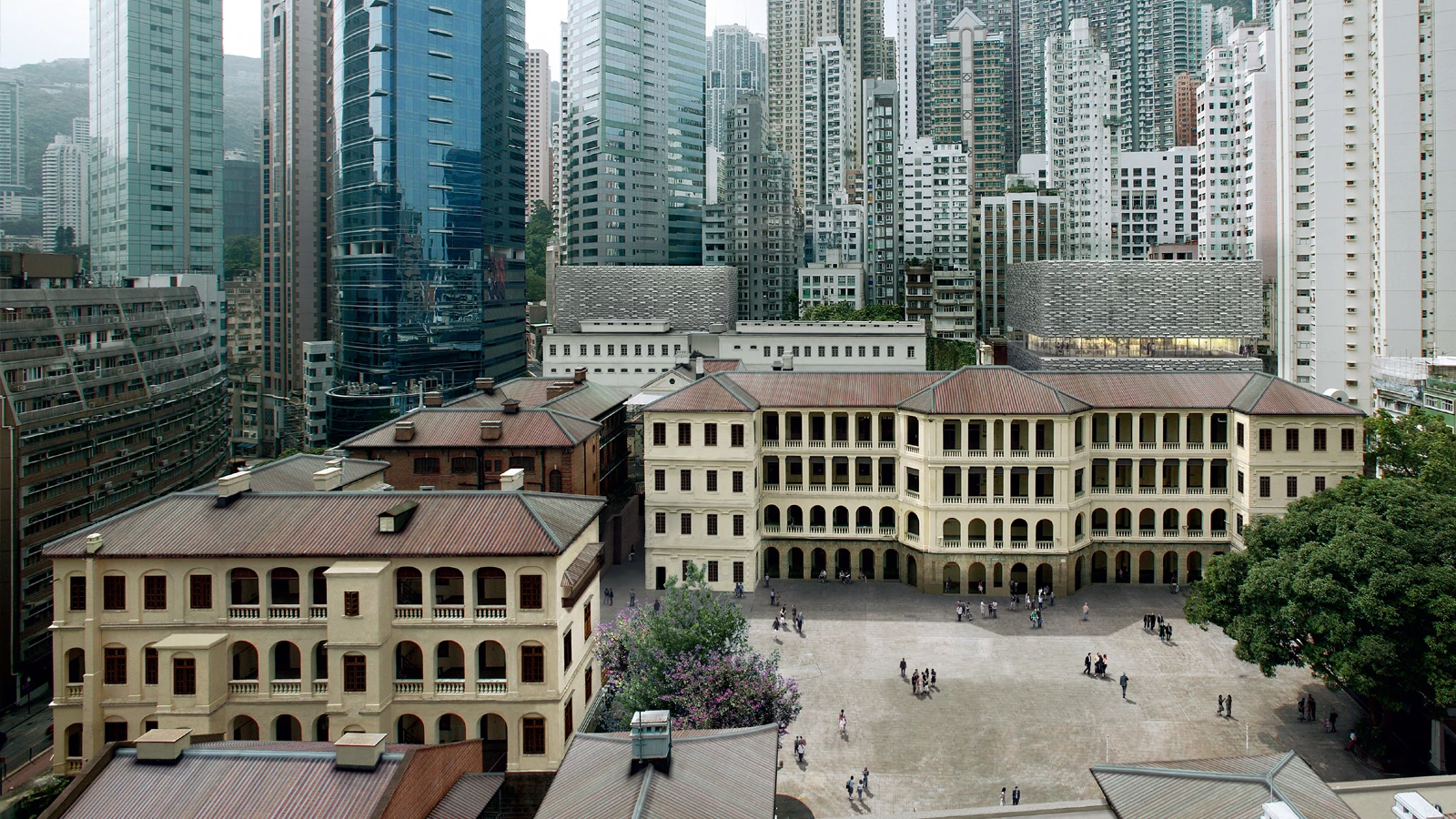
The former Central Police Station, Central Magistracy and Victoria Prison, known to the locals as ‘Tai Kwun’ (or big station), is a walled compound of heritage buildings at the commercial center of Hong Kong Island. Established by the British after 1841 as the colony’s main police station, magistracy and prison, the site is one of Hong Kong’s most important remaining historic monuments. From an urban perspective, the compound is a rare “courtyard” in the middle of one of the densest cities in the world, and has become an urban oasis of openness and calm within a forest of commercial and residential high-rises. The compound is structured around two large courtyards: the Parade Ground and the Prison Yard. The project aims to preserve the openness and distinct character of both and to revitalize them for public use as a new type of urban found space. The Parade Ground is surrounded on each side by several of the site’s most historic buildings, resulting in a formal open space with generous room for public recreation, events, direct access to restaurant and retail attractions, as well as smaller-scale cultural and educational spaces. The Prison Yard is subtly transformed from a rough and forbidding area to a new open space dedicated to cultural programming. Here, two distinctive volumes that float tightly above the surrounding granite walls are carefully inserted with a cantilevering shape. While the former buildings maintain their historical presence, the new ones establish a new relationship with the site by cantilevering just above the wall and allowing for new public and circulation spaces to be created below. At the same time, the buildings become new markers at the two ends of the compound, bringing attention to a formerly closed-off part of the city. The new volumes will complement the arts and culture programming of the former surrounding halls. While much of the original architecture and traces of the past are kept in the existing buildings, the new ones feature larger and more flexible spaces with technical facilities. Also, they provide covered outdoor gathering spaces, like a large stair for informal seating. The new constructions are both clad with a cast aluminum facade unit system that echoes the existing granite block elements of the surrounding wall. The use of 100% recycled aluminum as a material provides a distinctive architectural expression and materiality. The units are arranged in a system that obscures from view mechanical areas while porous enough to allow air circulation and views to the outside when desired.