The Art Institute of Chicago - The Modern Wing
Architect: Renzo Piano Building Workshop
Year: 2009
Location: Chicago, United States
Category: Cultural / Museum
Status: Built
About
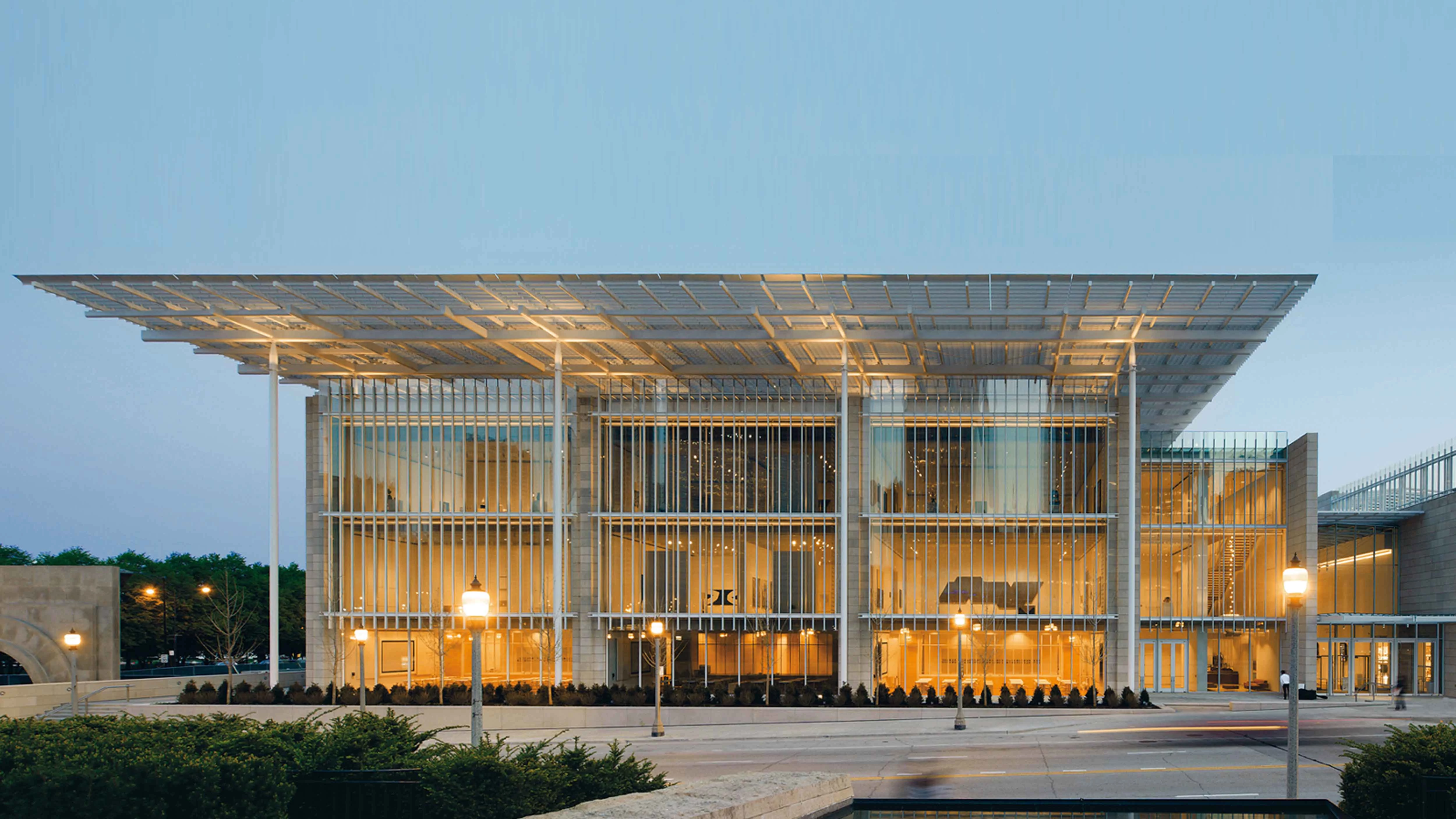
The new Modern Wing for the Art Institute of Chicago is not only the most ambitious extension undertaken by the institution, but it also turns this museum into the second largest in the United States. Consisting of two pavilions connected by a large central lobby, the Modern Wing offers three levels of exhibition spaces, aside from services like a shop, a ticket office and cloakroom, a cafeteria, a restaurant, and an interior garden. The pavilion of the east side contains, aside from an educational area, galleries for cinema, audiovisual exhibitions and new media on ground floor, and spaces for the permanent collection of contemporary art and modern European art on the first and second floors respectively. This last level has an innovative system for sun protection over the skylights: a ‘flying carpet’ of north-facing aluminum slats that ‘floats’ over the structure, permitting a selective entry of light to create the necessary conditions for a museum of these characteristics. This system, which evokes the horizontal and reflecting surface of the nearby Lake Michigan, will permit saving 50% of the energy in the illumination and climatization of the building. All windows on the different levels offer spectacular views onto Millennium Park and the Chicago skyline; a privilege that no other similar location of the city can enjoy. The pavilion of the western side, for its part, accommodates the auxiliary services for museum visitors and a gallery for temporary exhibitions of modern and contemporary art on ground floor, reserving the first level for exhibitions of the Department of Architecture and Design, and the second one for an open-sky terrace for temporary exhibits of contemporary sculpture. The terrace remains open every day of the year thanks to a heating system that melts the deposits of snow. It is connected with a cantilevered bridge, also designed by Renzo Piano Building Workshop, that links up the museum with Millennium Park.